Sunday, October 31, 2010

Shrek

In Prof. Ramirez-Berg's lecture, he discussed the Hollywood three-act structure, five act and other film structures. He explained that the Hollywood three-act structure derived from classical dramatic structure. The structure shifts the climax to the end of the film, and follows the pattern: introduction, complication, and resolution. Before the climax, the structure has a number of plot points which end acts, escalates stakes; imply complication, and transitions acts.

To further explain this structure, I will use the movie “Shrek” (2001) as an example. In the first 22-30 minutes of the film the characters are introduces, as well as the setting. We are introduced to Shrek, who is shown as a green ogre who enjoys leaving in the swamp by himself. But his happiness ends when numerous fairytale characters, including Pinocchio, the Three little Pigs, and Donkey are forced into the swamp by order of the Lord Farquaad. The plot point in the intro occurs when Shrek decides to leave his swamp and go ask Lord Fraquaad for his swamp back.
In the next thirty minutes of the film, the complication of the film occurs.  Lord Farquaad asks a magic mirror what he needs to become a real king, and the mirror tells him that he must marry a princess. Lord Farquaad chooses Princess Fiona, before the mirror can tell him about Princess Fiona’s secret. Shrek and Donkey arrive at Farquaad's palace in Duloc, where they find themselves in the midst of a tournament; the winner will have the "privilege" of attempting to rescue Fiona from a castle surrounded by lava and protected by a fire-breathing dragon so that Farquaad may marry her. Shrek and Donkey beat and Farquaad agrees to remove the fairytale creatures from the swamp if Shrek rescues Fiona. So Shrek and Donkey travel to rescue Fiona, and of course they rescue her from the dragon. The three of them make their return journey to Farquaad's palace, with Shrek and Fiona finding they have more in common with each other along the way, and falling in love. Soon, Donkey finds out that Fiona secret is that a spell was cast upon her and at night she turns into a disgusting ogre. The only way to break the spell is by true love’s first kiss. Shrek overhears the two talking, and assumes that Fiona was calling him disgusting. Shrek was about to confess his feelings for Fiona. The complication contains many plot points. Lord Farquaad choice to choose Princess Fiona, Shrek and Donkey’s decision to rescue Princess Fiona for Lord Farquaad, the rescue, Shrek’s decision to confess his feelings, and Shrek mistakenly hearing Donkey and Princess Fiona’s conversation are all plot points.
In the last minutes of the film, the resolution occurs, as well as the climax of the film. So after being crushed by what he thought he heard, Shrek brings Lord Farquaad to Princess Fiona. The two return to the castle, and Shrek goes back to his swamp. Here, Shrek discovers he is miserable and misses Fiona. Shrek finds out from Donkey that Princess Fiona was not talking about him, and the two decide to stop the wedding. They interrupt the wedding before Farquaad can kiss Fiona, but not before the sun sets, which causes Fiona to turn into an ogre in front of everyone. Shrek admits his love for Fiona, and the two kiss. The curse is broken, but Princess Fiona is still an ogre. Shrek tells Fiona that he does not care and that she is still beautiful. The two of them get married in the swamp and have a big celebration. In this part of the film the plot points include: Shrek bringing Lord Farquaad and Shrek deciding to stop the wedding. The climax occurs at the very end, when Shrek admits his love for Princess Fiona. The resolution occurs when Shrek and Princess Fiona marry each other and everyone celebrates.


Friday, October 22, 2010

GOOD TIMES!!

In Wednesday’s lecture by Colin Tain he discussed many different aspects and characteristics of the TV sitcom.  The TV sitcom is narrative fiction programming, which features reoccurring cycles and patterns. These patterns include reoccurring characters and environments incorporated with humor. They usually have a structure built around ads, reward polysemy, and are hyperbolic. These shows almost always have mini- resolutions, which means a problem or disturbance to the typical situation is usually presented in the beginning, but always resolved at the end. These characteristics make the sitcom a stable part of the viewer’s life. The viewer can watch and almost always know what to expect. This makes the viewer feel like watching the sitcom regularly, just to see if things will finally change.

These characteristics and aspects are very apparent in one of my favorite family sitcoms, Good Times. Good Times almost always centers on the same characters, the Evan’s family (Thelma, J.J., Michael, Flor, James), although sometimes the sitcom involves various guest actors. Of course this changes, as main characters are added and removed from the show, but for the most part the show centers on the family. The setting for the show is always in the “projects” or somewhere near. Something unfair is always happening to the Evan’s family and they seem to always be down on their luck, but through humor and good faith they always make it through their troubles. I even thought it was kind of funny (although I know it is not supposed to be) that every time things are going great for the Evan’s family and they are going to finally make it out of poverty, something awful happens.  This concept is even what causes Flor to debut her famous line, “Daamn, Daamn, Damn!”( lol)Eventually the Evan’s family does make it out of poverty, and the show ends. The reoccurring patterns and cycles are what make me love this show, and I could not imagine it any other way!


Alternative text

Friday, October 15, 2010

JUNO-Camera Shots


One of my favorite movies is Juno (2007), which was directed by Jason Reitman and written by Diablo Cody. I would like to discuss the opening scene of the film, which features the long shot, medium shot, and close-up shot that Prof. Ramirez-Berg discussed.
The long shot is typically at the beginning of the scene, but this is not always the case. It usually includes the general setting of the scene, and covers as much info as possible in one scene. The medium shot usually follows the long shot and contains most of the action happening in the scene. Most of the time, this shot further develops the scene and is a continuation of the long shot. Then, there is the close-up shot; this shot should reveal something about the story. This shot is typically emotional.
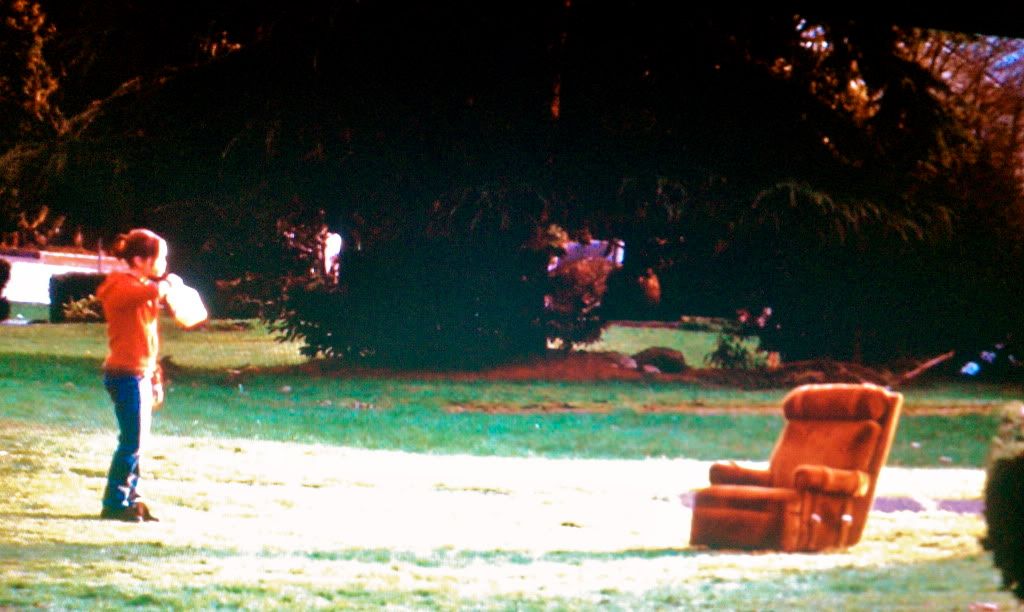
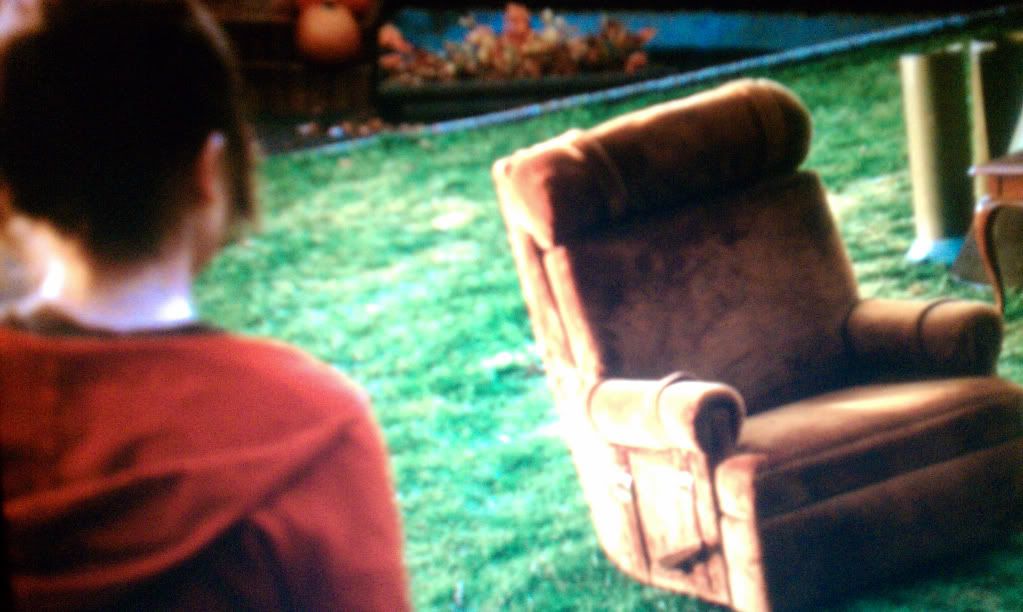
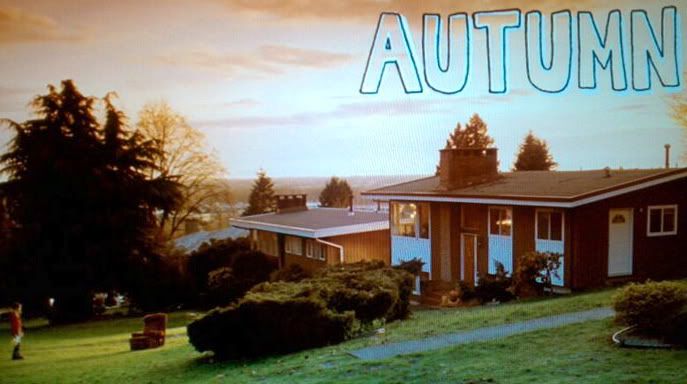
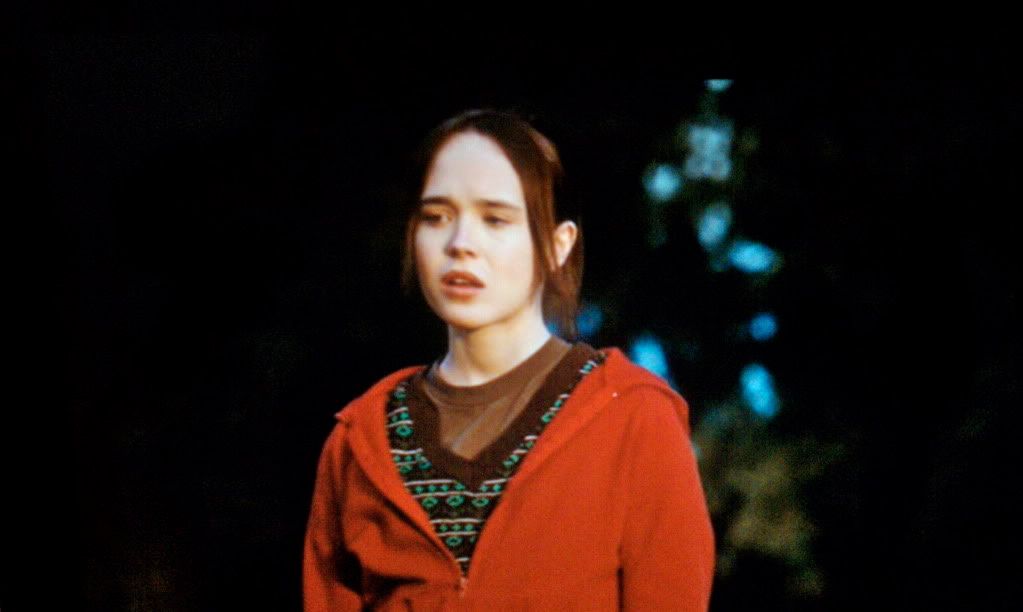
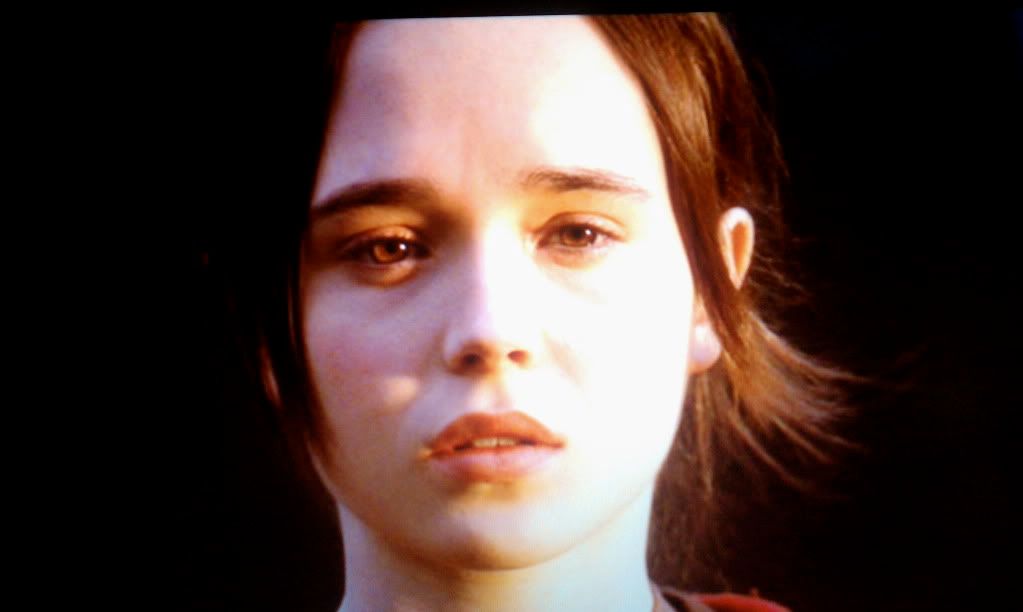
In Juno, the film opens up with a long shot of what appears to be Juno (the main character) standing off in the distance across from a chair. A plain flat house, surrounded by weird shaped hedges, is also included in the shot. The word “autumn” is written largely in the right corner of the shot.  The clouds are orange color, and it appears to be the start or the end of a day. This scene creates the setting for the entire movie and sets the mood also. It tells us the time and place of the movie. After the long shot, the movie transitions to a medium shot, which is where the audience receives confirmation that the character being shown is Juno. Juno seems to be having an intense moment with this chair. The audience can tell that this chair has some type of sentimental value to Juno. Next, we find out that Juno had sex with Bleeker (Juno’s best friend) in this chair. Then, the film transitions to a close-up of Juno’s face. Juno looks deeply disturbed, and we can tell that something is wrong.  Obviously, the events that took place in this chair did not lead to happy results.


Friday, October 8, 2010

The Studio System

The studio system was a monopolistic business, which dominated cinema around the 1930s to the 1950s. The system was completely vertically integrated, meaning the production and distribution was completely in-house. I think one of the most important aspects of the system was its factory- like production of films. The production of films was basically an assembly line complete with many writers, producers, and editors. This aspect reminds me of a game that I played as a child in elementary. We would all sit in a group circle, and a person would start off telling a story. Then we would go around the circle, allowing each person to add his or her input to the story.  By the end of the game, we would have this wild story complete with all of our input. This game mimics the production process in which films went through, and explains why certain kinds of films were made during this period.

The assembly line production process made films, which incorporated many different types of genres, as well as created films, which are loved by many. Many of these types of films have become classics. A prime example of this is the film, Casablanca. The film incorporates drama, romance, action, and many other genres effectively. The assortment of writers, producers, and editors contributed to the film’s combination of genres. This film has made a lasting impact on viewers everywhere, and has remained popular throughout the years.