Monday, November 29, 2010

Evaluation Extra Credit Blog


1.    No, I have never used a blog before attending RTF 305. 
2.    The blogs granted opportunities to apply the concepts taught in class to reality. We were able to incorporate some of the media, which we personally enjoy, into our blogs. This was really cool.
3.    At times, I had a hard time incorporating the multimedia into the blog due to technical difficulties, or I was just unable to find the exact multimedia that I wanted.

4.    If I encountered difficulties, I usually just improvised. I either uploaded my own photographs, or I used a vivid description of the multimedia I wanted.

5.    I thought the blogs about TV sitcoms and camera angles/shots was really interesting, because I was able to incorporate my favorite TV shows and films.
6.    Yes, because the blogs are a simple way to show that the student fully understands and can apply the given concept.
7.    It would be nice to receive feedback on the blogs from the TA’s. The grading system is really informing, but it would have been even better if we could have discussed the blog topics and some of the interesting responses in class. The blog should be incorporated more into the discussion section.


"Yes, you can use my blog in a paper or report".

Saturday, November 20, 2010

Globalization


Globalization is a process of increasing the interconnectedness among nations, cultures, and people. This process is supported and accelerated by technological developments. This process has effects on the environment, on culture, on political systems, on economic development and prosperity, and on human physical well being in societies around the world. Supporters of globalization argue that it allows poor countries to develop economically and raise their standards of living, where as opponents of globalization argue that the construction of an international free market has benefited the Western world (primarily the United States) at the expense of local cultures.
 This concept can be associated with cultural imperialism. Cultural imperialism refers to an unbalanced relationship in culture and media between countries. This issue seems to mostly concern the unequal flow of film, news, television programs, cable channels, and music from the United States to other countries. This is a major issue because Western culture is designed to help people become consumers; this often clashes with local culture.
A prime example of cultural imperialism on television is the hit reality television shows “American Idol”.  Although “ American Idol” is a competition, it also serves as an advertiser for its sponsors.  American Idol” constantly displays their sponsors’ products and logos. By Season 7, “American Idol” showed 4,151 product placements in its first 38 episodes, according to Nielsen Media Research (Grover). The reality show is broadcast to over 100 nations outside of the United States and has had an overwhelming influence on some of these nations. For example, in China “American Idol” has had a massive impact on the radio airplay, and has even influenced them to create their own version of the show.

Grover, Ronald (2008-05-28). "American Idol's Ads Infinitum". BusinessWeek. Retrieved 2009-02-11.


Friday, November 5, 2010

AXE!!

I believe the Axe “Clean Your Balls” advertisement is very persuasive; it implements comedy, sexual innuendos, and gender stereotyping. The advertisement is hilarious and shocking and grabs people’s attention. As soon as people hear, “keep your balls clean”, they want to continue watching the commercial to find out what the commercial is about. The sexual innuendos and gender stereotyping are targeted towards their consumers, which are young male / female (they buy Axe for the men in their lives or encourage the purchase). Young people think the obvious sexual innuendos are hilarious, so they want to watch. However, the gender stereotyping in the advertisement is not so obvious. First, two attractive females are the stars of the advertisement, and they are “cleaning the balls”.  They are teaching the men how to clean. Secondly, the men in the commercial are mostly all young, attractive guys who seem to not know how to “keep their balls clean”. This commercial seems to just be funny on the surface, but it is very powerful and persuasive.

I will discuss the most obvious appeal in the advertisement, which is sex. This appeal is simple; sex sells. Sexuality makes the audience curious and can create strong emotions about the advertisement. This appeal can make the product seem interesting, but also can make the product seem vulgar.

This Axe advertisement exemplifies sex appeal through its use of sexual innuendos and casting choice. The entire advertisement is based on a sexual innuendo; this sexual innuendo is carried out throughout the entire commercial. Also the advertisement’s stars are two seemingly young, attractive women.  The other cast members are mostly seemingly young, attractive men. This advertisement says young attractive men use Axe, and young attractive women like/want the men in their lives to use axe.


Sunday, October 31, 2010

Shrek

In Prof. Ramirez-Berg's lecture, he discussed the Hollywood three-act structure, five act and other film structures. He explained that the Hollywood three-act structure derived from classical dramatic structure. The structure shifts the climax to the end of the film, and follows the pattern: introduction, complication, and resolution. Before the climax, the structure has a number of plot points which end acts, escalates stakes; imply complication, and transitions acts.

To further explain this structure, I will use the movie “Shrek” (2001) as an example. In the first 22-30 minutes of the film the characters are introduces, as well as the setting. We are introduced to Shrek, who is shown as a green ogre who enjoys leaving in the swamp by himself. But his happiness ends when numerous fairytale characters, including Pinocchio, the Three little Pigs, and Donkey are forced into the swamp by order of the Lord Farquaad. The plot point in the intro occurs when Shrek decides to leave his swamp and go ask Lord Fraquaad for his swamp back.
In the next thirty minutes of the film, the complication of the film occurs.  Lord Farquaad asks a magic mirror what he needs to become a real king, and the mirror tells him that he must marry a princess. Lord Farquaad chooses Princess Fiona, before the mirror can tell him about Princess Fiona’s secret. Shrek and Donkey arrive at Farquaad's palace in Duloc, where they find themselves in the midst of a tournament; the winner will have the "privilege" of attempting to rescue Fiona from a castle surrounded by lava and protected by a fire-breathing dragon so that Farquaad may marry her. Shrek and Donkey beat and Farquaad agrees to remove the fairytale creatures from the swamp if Shrek rescues Fiona. So Shrek and Donkey travel to rescue Fiona, and of course they rescue her from the dragon. The three of them make their return journey to Farquaad's palace, with Shrek and Fiona finding they have more in common with each other along the way, and falling in love. Soon, Donkey finds out that Fiona secret is that a spell was cast upon her and at night she turns into a disgusting ogre. The only way to break the spell is by true love’s first kiss. Shrek overhears the two talking, and assumes that Fiona was calling him disgusting. Shrek was about to confess his feelings for Fiona. The complication contains many plot points. Lord Farquaad choice to choose Princess Fiona, Shrek and Donkey’s decision to rescue Princess Fiona for Lord Farquaad, the rescue, Shrek’s decision to confess his feelings, and Shrek mistakenly hearing Donkey and Princess Fiona’s conversation are all plot points.
In the last minutes of the film, the resolution occurs, as well as the climax of the film. So after being crushed by what he thought he heard, Shrek brings Lord Farquaad to Princess Fiona. The two return to the castle, and Shrek goes back to his swamp. Here, Shrek discovers he is miserable and misses Fiona. Shrek finds out from Donkey that Princess Fiona was not talking about him, and the two decide to stop the wedding. They interrupt the wedding before Farquaad can kiss Fiona, but not before the sun sets, which causes Fiona to turn into an ogre in front of everyone. Shrek admits his love for Fiona, and the two kiss. The curse is broken, but Princess Fiona is still an ogre. Shrek tells Fiona that he does not care and that she is still beautiful. The two of them get married in the swamp and have a big celebration. In this part of the film the plot points include: Shrek bringing Lord Farquaad and Shrek deciding to stop the wedding. The climax occurs at the very end, when Shrek admits his love for Princess Fiona. The resolution occurs when Shrek and Princess Fiona marry each other and everyone celebrates.



Friday, October 22, 2010

GOOD TIMES!!

In Wednesday’s lecture by Colin Tain he discussed many different aspects and characteristics of the TV sitcom.  The TV sitcom is narrative fiction programming, which features reoccurring cycles and patterns. These patterns include reoccurring characters and environments incorporated with humor. They usually have a structure built around ads, reward polysemy, and are hyperbolic. These shows almost always have mini- resolutions, which means a problem or disturbance to the typical situation is usually presented in the beginning, but always resolved at the end. These characteristics make the sitcom a stable part of the viewer’s life. The viewer can watch and almost always know what to expect. This makes the viewer feel like watching the sitcom regularly, just to see if things will finally change.

These characteristics and aspects are very apparent in one of my favorite family sitcoms, Good Times. Good Times almost always centers on the same characters, the Evan’s family (Thelma, J.J., Michael, Flor, James), although sometimes the sitcom involves various guest actors. Of course this changes, as main characters are added and removed from the show, but for the most part the show centers on the family. The setting for the show is always in the “projects” or somewhere near. Something unfair is always happening to the Evan’s family and they seem to always be down on their luck, but through humor and good faith they always make it through their troubles. I even thought it was kind of funny (although I know it is not supposed to be) that every time things are going great for the Evan’s family and they are going to finally make it out of poverty, something awful happens.  This concept is even what causes Flor to debut her famous line, “Daamn, Daamn, Damn!”( lol)Eventually the Evan’s family does make it out of poverty, and the show ends. The reoccurring patterns and cycles are what make me love this show, and I could not imagine it any other way!


Alternative text

Friday, October 15, 2010

JUNO-Camera Shots


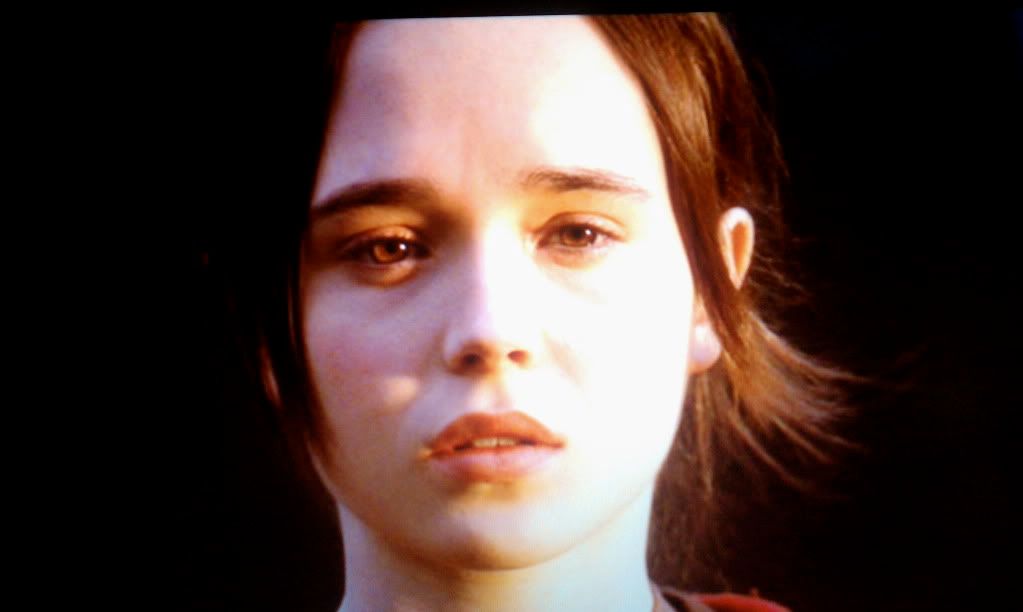
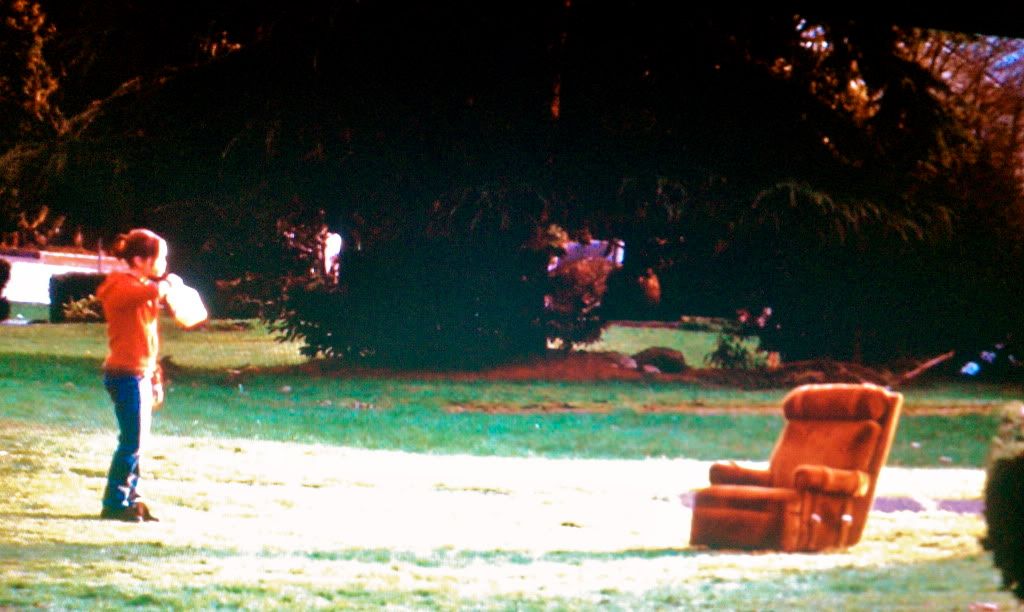
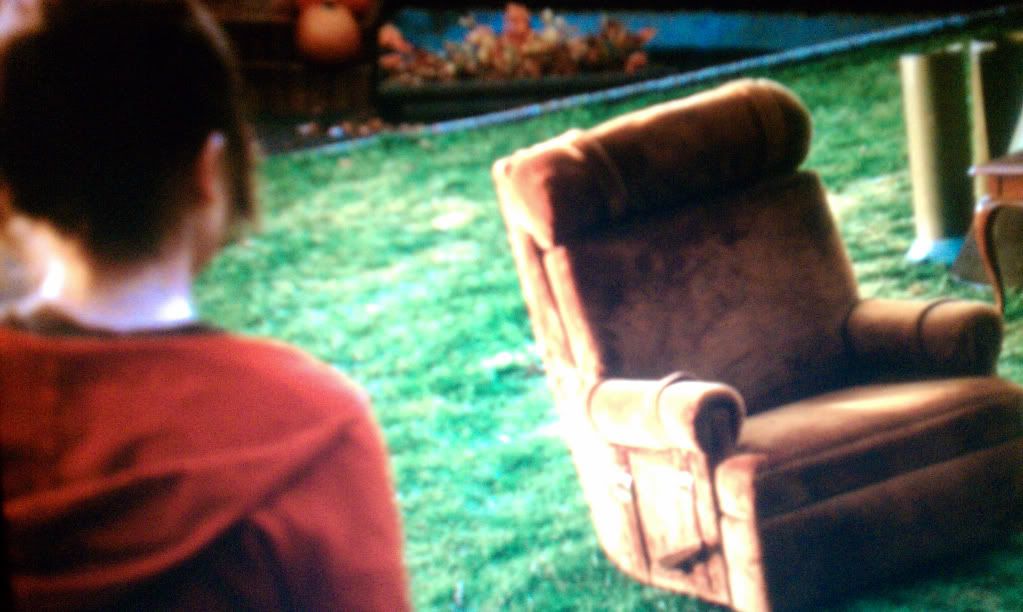
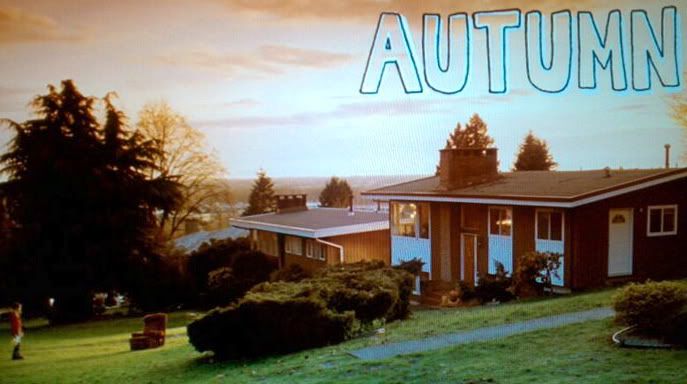
One of my favorite movies is Juno (2007), which was directed by Jason Reitman and written by Diablo Cody. I would like to discuss the opening scene of the film, which features the long shot, medium shot, and close-up shot that Prof. Ramirez-Berg discussed.
The long shot is typically at the beginning of the scene, but this is not always the case. It usually includes the general setting of the scene, and covers as much info as possible in one scene. The medium shot usually follows the long shot and contains most of the action happening in the scene. Most of the time, this shot further develops the scene and is a continuation of the long shot. Then, there is the close-up shot; this shot should reveal something about the story. This shot is typically emotional.
In Juno, the film opens up with a long shot of what appears to be Juno (the main character) standing off in the distance across from a chair. A plain flat house, surrounded by weird shaped hedges, is also included in the shot. The word “autumn” is written largely in the right corner of the shot.  The clouds are orange color, and it appears to be the start or the end of a day. This scene creates the setting for the entire movie and sets the mood also. It tells us the time and place of the movie. After the long shot, the movie transitions to a medium shot, which is where the audience receives confirmation that the character being shown is Juno. Juno seems to be having an intense moment with this chair. The audience can tell that this chair has some type of sentimental value to Juno. Next, we find out that Juno had sex with Bleeker (Juno’s best friend) in this chair. Then, the film transitions to a close-up of Juno’s face. Juno looks deeply disturbed, and we can tell that something is wrong.  Obviously, the events that took place in this chair did not lead to happy results.


Friday, October 8, 2010

The Studio System

The studio system was a monopolistic business, which dominated cinema around the 1930s to the 1950s. The system was completely vertically integrated, meaning the production and distribution was completely in-house. I think one of the most important aspects of the system was its factory- like production of films. The production of films was basically an assembly line complete with many writers, producers, and editors. This aspect reminds me of a game that I played as a child in elementary. We would all sit in a group circle, and a person would start off telling a story. Then we would go around the circle, allowing each person to add his or her input to the story.  By the end of the game, we would have this wild story complete with all of our input. This game mimics the production process in which films went through, and explains why certain kinds of films were made during this period.

The assembly line production process made films, which incorporated many different types of genres, as well as created films, which are loved by many. Many of these types of films have become classics. A prime example of this is the film, Casablanca. The film incorporates drama, romance, action, and many other genres effectively. The assortment of writers, producers, and editors contributed to the film’s combination of genres. This film has made a lasting impact on viewers everywhere, and has remained popular throughout the years. 


Thursday, September 30, 2010

"All in the Family" vs. "Two in a Half Men"and "Modern Family"

The sitcom “All in the Family” is different from contemporary sitcoms because it serves as only the beginning of the family sitcom deviating from the traditional “perfect family (the working/all-knowing dad, stay at home mom, and the 2.5 kids). “All in the Family” featured an ignorant (yet funny) dad with a limited education, and tackled issues that are heavily debated such as race, sex, and politics. The show presents liberal as well as conservative viewpoints on all of the issues, and expresses the realities of the world.
Even though the show deviated from the traditional family, most of the issues that were discussed did not occur within the actual immediate family, and the show did not deviate nearly as much as sitcoms do now. Now sitcoms such as “Two and a Half Men” completely deviate from the traditional family by not incorporating the values of the “perfect” family. “Two and a Half Men” does not feature a mother, but instead involves two men raising a child. Some shows even bring the realities of the world into the immediate family, such as “Modern Family”. This show features three different types of families (muti-cultural, traditional, and homosexual) and shows the trials they go through. Now shows offer a wider range of differences in cultures, sex, and beliefs, however most of them do not focus on politics and serious issues as much as “All in the Family” did. Both “Two and a Half Men” and “ Modern Family” rarely involve topics such as politics. The sitcoms now depend more on comedy to fuel the show. Comedy remains important in the sitcoms, and is incorporated into all three.


two-and-a-half-men.jpgimgres.jpg
imgres.jpg


Friday, September 24, 2010

Technological Change in the !920's

Technological change shaped the formation of radio in the 1920’s by making all the many purposes clear to the public, and by proving its usefulness.
Technological change usually works in a process, which includes the invention, innovation, and then the diffusion. The invention stage is usually the part that involves the most creativity. It simply means an inventor will invent something that the public views as new. Next, is the innovation stage, this is the period when the inventions purpose is discovered. A lot of the time the inventors intended purpose, is not the purpose that the public finds most useful.  The public takes the invention, and innovates the invention into their lives in a way that is most beneficial to them. Last, is the diffusion stage, this is when the invention is spread out amongst a population. During this stage the invention is shared with a variety of users.
imgres.jpegIn the 1920’s technological change helped in the evolution of the radio. New developments such as the vacuum tube, which made radio able to transmit sound, made radio seem useful in various different ways.  After this invention Frank Conrad begin making radio broadcasts which attracted interests and newspaper coverage, and after that a store decided to sell radios to pick the regular broadcasts, and the station KDKA came about. Because of radios’ new technological capabilities people begin to innovate and diffuse the invention. The new technology made people think of things to do with radio, the text states retail stores started radio stations just to promote goods, newspapers saw news potential; schools and churches saw educational possibilities. Technological change made the evolution of radio possible.


Wednesday, September 15, 2010

Cultivation Theory: Tobacco

Doctor is endorsing smoking in ad

Couple in Movie Smoking
Happy Couple in Ad Smoking
THEN
Cartoons Smoking
                                                                            
Betty Davis Smoking


The concept of cultivation helps me to understand the purpose of the media’s current presentation of tobacco.
The cultivation theory simply describes the process that is used to make images or ideas a reality amongst the receivers (people receiving the images or ideas). The images or ideas are consistently beat into the minds of the receivers until they become apart of the receivers’ thoughts and opinions. This is done sub-consciously without the receiver even realizing it. The images or ideas are slipped into magazines, television, newspapers, basically anywhere and anything dealing with everyday life. I think the concept basically is legal brainwashing.
Cultivation helps me to understand the methods behind the media’s current presentation of tobacco.  I see Public Service Announcements ad campaigns on television, in schools, magazines all the time stressing the horrid characteristics of tobacco. They talk about the ingredients, facts about deaths resulting from tobacco, and the negative image that goes along with tobacco.  All the PSA ads present tobacco as poison that kills innocent people. There are hardly any commercials promoting tobacco, and everyone fears that tobacco causes cancer. In movies now, the bad guys smoke. Now tobacco has this negative image and stigma. In the 50’s -60’s era tobacco was presented as positive, and endorsed by many celebrities in movies and television; most thought of tobacco as positive. It was seen as a normal part of everyday life.  Now it is the exact opposite, it has been cultivated into our minds that tobacco is bad now...but hasn't it always been bad?


NOW

PSA


PSA:Nasty Cigarette Ingredients


Friday, September 10, 2010

Framing is very dominate force in media and apparent in a lot of commercials. One in particular I would like to focus on is the KFC Double Down commercial being aired all over television right now. Framing helps me to understand why the sandwich is presented the way it is.
In my opinion framing is just how the media wants you to think or feel about a certain topic. The media basically delivers the information exactly how they want the receiver to receive. Whether this means leaving out important details, or emphasizing details that are not important. Another way to look at framing is to dissect the word for what it really means. A frame is a structure that you place things that you think are important in (ex. House frame, picture frame), and –ing is he suffix which mean the act of doing. So the media decides what they want to put into their frames, and how they want information to be interpreted or looked at by the public.
As for the KFC commercial I think it hilarious how they frame the ad. They emphasize that the sandwich is a hunger killer, makes men “unhungry”, and that it is not a sandwich for wimps. They even have the men to speak in high-tones to emphasize their weakness before eating the sandwich, and after they eat it, they’re strong men again. However KFC conveniently leaves out the horrid nutritional facts, and about how even though the sandwich may make you “unhungry”, it is extremely unhealthy! They use large men, images of the hearty sandwich with the ingredients piled on, and words that do not exist like “unhungry” to make the viewer think this sandwich is the best choice for them if they want to be full. They frame this ad to make this sandwich seem amazing, and it really is not that amazing.


Sunday, August 29, 2010


Hello! I am Paige Harris, a freshman Journalism major from Houston, Texas. I have chosen to take RTF 305 because it seems to be a very interesting course, which would be useful to me throughout my career involved with the media. I am very eager to learn all about the media including the good, the bad, and the ugly. As I enter this course, I already have a few theories about the media’s antic. I am often very skeptical about the media’s intentions and different roles in society. I have been told that the media’s essential role in society is to inform, however I question the information that we are being informed about. Already as I read Media Now, I can see that I am not alone in some of my theories. I am just eager to become more acquainted with the media’s actual purpose, and I hope that this course will help answer some of my many questions.

Well enough of that, here's a link to one of my favorite blogs!